Wednesday, 20 August 2008
Welcome!
Catholic Physicians' Blog welcomes Matthew Doyle who blogs at http://www.lacrimarum-valle.blogspot.com/. Welcome Matthew. Love your blog!

Friday, 18 July 2008
The Saint Song
As a child of the 60's, 70's, and beyond, I remember hearing Tom Lehrer belt out tunes on albums from "Wehrner von Braun" to "The Vatican Rag" to "National Brotherhood Week." One of those memorable ditties was "The Elements Song," in which Tom went through all of the known elements up to that time sung to the tune of Gilbert & Sullivan's, "I am the very model of a Modern Major General."
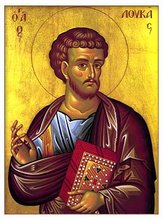
The trials and tribulations of the Saints and how they sought and achieved holiness has been an interest of mine for quite some time, especially those Saints that we as physicians look to for patronage - Luke, Cosmas and Damien, Pantaleone, etc. I thought of a way recently to introduce others to the Saints, in a "Lehrer-esque" manner. This is the result. Hope you like it.
Wednesday, 21 May 2008
Wednesday, 27 February 2008
The Path to Euthanasia
A recent medical study cast doubt on whether antibiotics should be administered to patients in the advanced stages of dementia. The argument is that it doesn't improve the "quality of life" and that it increases the likelihood of creating super- resistant bacteria which the nursing home resident then brings to the hospital when they get admitted.
As a geriatrician with a practice in skilled nursing facilities, I am concerned about what message this study sends to physicians and the lay community. It is fairly clear to most physicians when a patient is dying and antibiotics are futile. It is not always clear if a patient develops a fever that this will be their terminal event. A dementia patient who spikes a temp is not necessarily moribund and a simple once a day parenteral antibiotic may help them turn the corner, if indeed it is not yet their time to go. By us witholding antibiotics are we "stacking the deck" in a way that will increase the likelihood of their dying? To me this is erring on the side of death and not life! If we are to err, let it be on the side of life, regardless of what someone determines is the "quality of life."
I see this as the tip of the iceberg and we are going to start seeing more "studies" that show the futility of medical treatments for patients with dementia and other "poor quality of life" diseases. We already have a small body of literature that suggests feeding tubes do not prolong the quality of life and as a result, ethics committees in hospitals cite these studies to deny PEG tubes to patients with advanced dementia. Now we will have ethics committees recommending the withdrawl of antibiotics if a patient with urosepsis and dementia presents to the ER with a change in mental status. Perhaps I am being an alarmist, but I don't think so. This is just another brick being layed down on the road to Euthanasia.
As a geriatrician with a practice in skilled nursing facilities, I am concerned about what message this study sends to physicians and the lay community. It is fairly clear to most physicians when a patient is dying and antibiotics are futile. It is not always clear if a patient develops a fever that this will be their terminal event. A dementia patient who spikes a temp is not necessarily moribund and a simple once a day parenteral antibiotic may help them turn the corner, if indeed it is not yet their time to go. By us witholding antibiotics are we "stacking the deck" in a way that will increase the likelihood of their dying? To me this is erring on the side of death and not life! If we are to err, let it be on the side of life, regardless of what someone determines is the "quality of life."
I see this as the tip of the iceberg and we are going to start seeing more "studies" that show the futility of medical treatments for patients with dementia and other "poor quality of life" diseases. We already have a small body of literature that suggests feeding tubes do not prolong the quality of life and as a result, ethics committees in hospitals cite these studies to deny PEG tubes to patients with advanced dementia. Now we will have ethics committees recommending the withdrawl of antibiotics if a patient with urosepsis and dementia presents to the ER with a change in mental status. Perhaps I am being an alarmist, but I don't think so. This is just another brick being layed down on the road to Euthanasia.
Tuesday, 29 January 2008
Holy Father: "Science Cannot Understand the Mystery of Man."
Pope Benedict XVI addressed academics gathered in Rome to study the human person. The Holy Father told those in attendance:
"...the exact sciences, both natural and human, have made prodigious advances in their understanding of man and his universe". However at the same time "there is a strong temptation to circumscribe human identity and enclose it with the limits of what is known.”
“In order to avoid going down this path,” the Pontiff said, “it is important not to ignore anthropological, philosophical and theological research, which highlight and maintain the mystery of human beings, because no science can say who they are, where they come from and where they go. The knowledge of human beings is then, the most important of all forms of knowledge".
"Human beings always stand beyond what can be scientifically seen or perceived", the Pope affirmed. This failure manifests itself today in “an incapacity to recognize the foundation upon which human dignity rests, from the embryo until natural death," said the Pope.
"Starting from the question of the new being, who is produced by a fusion of cells and who bears a new and specific genetic heritage", the Holy Father told his audience, "you have highlighted certain essential elements in the mystery of man". Man, said the Pope is "characterized by his otherness. He is a being created by God, a being in the image of God, a being who is loved and is made to love. As a human he is never closed within himself. He is always a bearer of otherness and, from his origins, is in interaction with other human beings".
For those whose of you who read Italian (Paul), find the speech here (and for the rest of us an article about the speech here.)
Wednesday, 16 January 2008
The American College of Obstetricians and Gynecologists and Medical "Ethics"
A rather disappointing position from another professional organization. According to Renew America:
Unfortunately this is yet one more example of a professional organization
which has become so politicized and "PC" that it is but a shadow of its
historical self and mission. I would suggest that one would be hard pressed to
justify membership in the ACOG if one is serious about one's Catholic
faith.
The political effort to protect so-called reproductive medicine has led ACOG to the conclusion, according to its Committee on Ethics, that even when healthcare providers have moral concerns about a decision a patient has made, they may not allow those concerns to translate into a refusal to provide a "service" or a prescription to that patient.
If one examines this premise and the committee's language, it becomes painfully clear that the target for the statement is the Christian medical community. For example, in the ACOG statement, we find the following:
When conscientious refusals conflict with moral obligations that are central to the ethical practice of medicine, ethical care requires either that the physician provide care despite reservations or that there be resources in place to allow the patient to gain access to care in the presence of conscientious refusal.
Unfortunately this is yet one more example of a professional organization
which has become so politicized and "PC" that it is but a shadow of its
historical self and mission. I would suggest that one would be hard pressed to
justify membership in the ACOG if one is serious about one's Catholic
faith.
Tuesday, 15 January 2008
Welcome to Sabin
Welcome to Sabin, our newest member. If you have a blog or web site, Sabin, send me the address and I will blogroll it. We're glad that you are with us and look forward to your posts.
Peace.
Peace.
Subscribe to:
Posts (Atom)